Kurš datēja Émilie du Châtelet?
Voltaire datēja Émilie du Châtelet no ? līdz ?. Vecuma starpība bija 12 gadus, 0 mēnešus un 26 dienas.
Jean François de Saint-Lambert datēja Émilie du Châtelet no ? līdz ?. Vecuma starpība bija 10 gadus, 0 mēnešus un 9 dienas.
Émilie du Châtelet

Gabrielle Émilie Le Tonnelier de Breteuil, Marquise du Châtelet (French: [emili dy ʃɑtlɛ] ; 17 December 1706 – 10 September 1749) was a French mathematician and physicist.
Her most recognized achievement is her philosophical magnum opus, Institutions de Physique (Paris, 1740, first edition; Foundations of Physics). She then revised the text substantially for a second edition with the slightly modified title Institutions physiques (Paris, 1742). It circulated widely, generated heated debates, and was translated into German and Italian in 1743. The Institutions covers a wide range of topics, including the principles of knowledge, the existence of God, hypotheses, space, time, matter and the forces of nature. Several chapters treat Newton's theory of universal gravity and associated phenomena. Later in life, she translated into French, and wrote an extensive commentary on, Isaac Newton's Philosophiæ Naturalis Principia Mathematica. The text, published posthumously in 1756, is still considered the standard French translation to this day.
Du Châtelet participated in the famous vis viva debate, concerning the best way to measure the force of a body and the best means of thinking about conservation principles. Posthumously, her ideas were represented prominently in the most famous text of the French Enlightenment, the Encyclopédie of Denis Diderot and Jean le Rond d'Alembert, first published shortly after du Châtelet's death.
She is also known as the intellectual collaborator with and romantic partner of Voltaire. In the two centuries since her death, numerous biographies, books, and plays have been written about her life and work. In the early twenty-first century, her life and ideas have generated renewed interest.
Lasīt vairāk...Voltaire

Voltērs (franču: Voltaire, izrunā: /vɔl.tɛːʁ/), īstajā vārdā Fransuā Marī Aruē (François Marie Arouet, [fʁɑ̃.swa ma.ʁi aʁ.wɛ]; dzimis 1694. gada 21. novembrī, miris 1778. gada 30. maijā), bija franču Apgaismības laikmeta rakstnieks, filozofs, psihologs, vēsturnieks, publicists un satīriķis. Viņš rakstīja alegoriskas lugas, satīriskus apcerējumus un traģēdijas, kā arī vēsturiskus apcerējumus, dzejoļus un rakstus Denī Didro "Enciklopēdijai". Voltērs pavisam ir sarakstījis 52 lugas. Viņš iestājās pret Romas katoļu baznīcu un klerikālismu, pret vienpersonisku (karaļa) varu un augstmaņiem.
Lasīt vairāk...Émilie du Châtelet
Jean François de Saint-Lambert
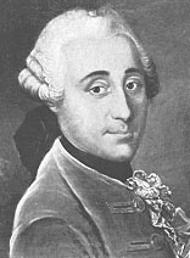
Jean-François, marquis de Saint-Lambert, né à Nancy le et mort à Paris le , est un militaire, philosophe, conteur et poète lorrain puis, après 1766, français. La Revue de Metz publiée en 1845 affirme que le poète Saint-Lambert est né à Affracourt le 24 mars 1723 mais c'est une confusion entre Jean-François et Charles-Henry, son frère cadet.
Lasīt vairāk...