Kurš datēja Ernans Kortess?
Isabel Moctezuma datēja Ernans Kortess no ? līdz ?.
La Malinche datēja Ernans Kortess no ? līdz ?.
Ernans Kortess
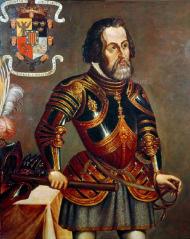
Ernans Kortess, pilnā vārdā Fernando Kortess Montojs Pisarro Altamirano (spāņu: Fernando Cortés Monroy Pizarro Altamirano, dzimis 1485. gadā Medeljinā, Kastīlijas Karalistē (tagad Spānija), miris 1547. gada 2. decembrī Kastiljejā de la Kvestā (Castilleja de la Cuesta), pie Seviljas, Spānijā) bija spāņu konkistadors, kurš no 1519. līdz 1521. gadam iekaroja tagadējās Meksikas teritorijā esošo Acteku impēriju. Literatūrā tiek dēvēts arī par Fernando, Ernando, Fernānu, Ernānu (no vārda saīsinātā varianta Hernán Cortés). Spānijas karalis Kārlis V piešķīra viņam Oahakas marķīza titulu (Marqués del Valle de Oaxaca).
Par viņa dzīvi ir saglabājies maz rakstītu avotu, un tie bieži ir pretrunīgi, tādēļ par notikumiem E. Kortesa dzīves laikā, bet it īpaši viņa personību un uzskatiem vēsturnieku domas dalās.
Lasīt vairāk...Isabel Moctezuma

Doña Isabel Moctezuma (born Tecuichpoch Ichcaxochitzin; 1509/1510 – 1550/1551) was a daughter of the Aztec ruler Moctezuma II. She was the consort of Atlixcatzin, a tlacateccatl, and of the Aztec emperors Cuitlahuac and Cuauhtemoc and as such the last Aztec empress. After the Spanish conquest, Doña Isabel was recognized as Moctezuma's legitimate heir, and became one of the indigenous Mexicans granted an encomienda. Among the others were her half-sister Marina (or Leonor) Moctezuma, and Juan Sánchez, an Indian governor in Oaxaca.
Isabel was married to one tlacateccatl, two Aztec emperors and three Spaniards, and widowed five times. She had a daughter out of wedlock whom she refused to recognize, Leonor Cortés Moctezuma, with conquistador Hernán Cortés. Her sons founded a line of Spanish nobility. The title of Duke of Moctezuma de Tultengo descends from her brother, and still exists.
Lasīt vairāk...Ernans Kortess
La Malinche

Marina ([maˈɾina]) or Malintzin ([maˈlintsin]; c. 1500 – c. 1529), more popularly known as La Malinche ([la maˈlintʃe]), was a Nahua woman from the Mexican Gulf Coast, who became known for contributing to the Spanish conquest of the Aztec Empire (1519–1521), by acting as an interpreter, advisor, and intermediary for the Spanish conquistador Hernán Cortés. She was one of 20 enslaved women given to the Spaniards in 1519 by the natives of Tabasco. Cortés chose her as a consort, and she later gave birth to their first son, Martín – one of the first Mestizos (people of mixed European and Indigenous American ancestry) in New Spain.
La Malinche's reputation has shifted over the centuries, as various peoples evaluate her role against their own societies' changing social and political perspectives. Especially after the Mexican War of Independence, which led to Mexico's independence from Spain in 1821, dramas, novels, and paintings portrayed her as an evil or scheming temptress. In Mexico today, La Malinche remains a powerful icon – understood in various and often conflicting aspects as the embodiment of treachery, the quintessential victim, or the symbolic mother of the new Mexican people. The term malinchista refers to a disloyal compatriot, especially in Mexico.
Lasīt vairāk...